
Bottom line first: 2026 is officially Apple's price-hike year. The iPhone 18 Pro and Pro Max each cost ¥1,000 more at launch (from ¥9,999 / ¥10,999 in China, per the official Apple store), yet the Pro series still sold nearly 1.3 million units across all channels in its first seven days — and the Pro Max remains backordered. Phones are not the whole story: Apple Music saw a global price increase in July, US AppleCare+ plans went up the same month, and Apple was reported in late September to be planning a major AppleCare restructuring. Our advice: for hardware, wait if you can (new orders now ship mid-October); for subscriptions, prepay with Apple gift cards to lock in a fixed budget — the balance never expires, so future price hikes cannot touch what you have already loaded; and for teams, bulk-distribute fixed-denomination eGift cards so reward budgets are booked once and insulated from later increases.
1. The 48-hour recap: ¥1,000 dearer, yet still hard to get
According to MyDrivers (via Fenghuang Tech) on September 30, tracking blogger RD Sales ranked the iPhone 18 Pro Max first and the iPhone 18 Pro second on China’s week-38 single-model sales chart. The iPhone 18 Pro series moved close to 1.3 million units across all channels in its first seven days on sale, with about 322,800 units on day one — ahead of last year’s pace on several metrics. The Pro Max is still supply-constrained: JD.com currently quotes an October 14 ship date for new orders.
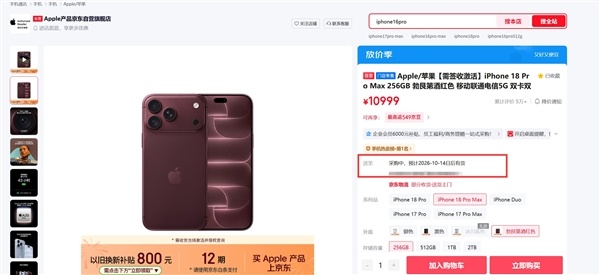
Market-research data points the same way. Citing Counterpoint Research’s weekly China smartphone tracker, The Paper reported that the iPhone 18 Pro series’ first three days on sale (only three days of week 38) grew 12% year over year versus the iPhone 17 Pro series’ first full week, lifting Apple to the top of China’s weekly market share ranking at 33%. Senior analyst Ivan Lam’s read: the base iPhone 18’s delay to next spring pushed some buyers toward the Pro models, while many Chinese flagship phones rising by more than $200 lifted the price anchor for the whole segment.
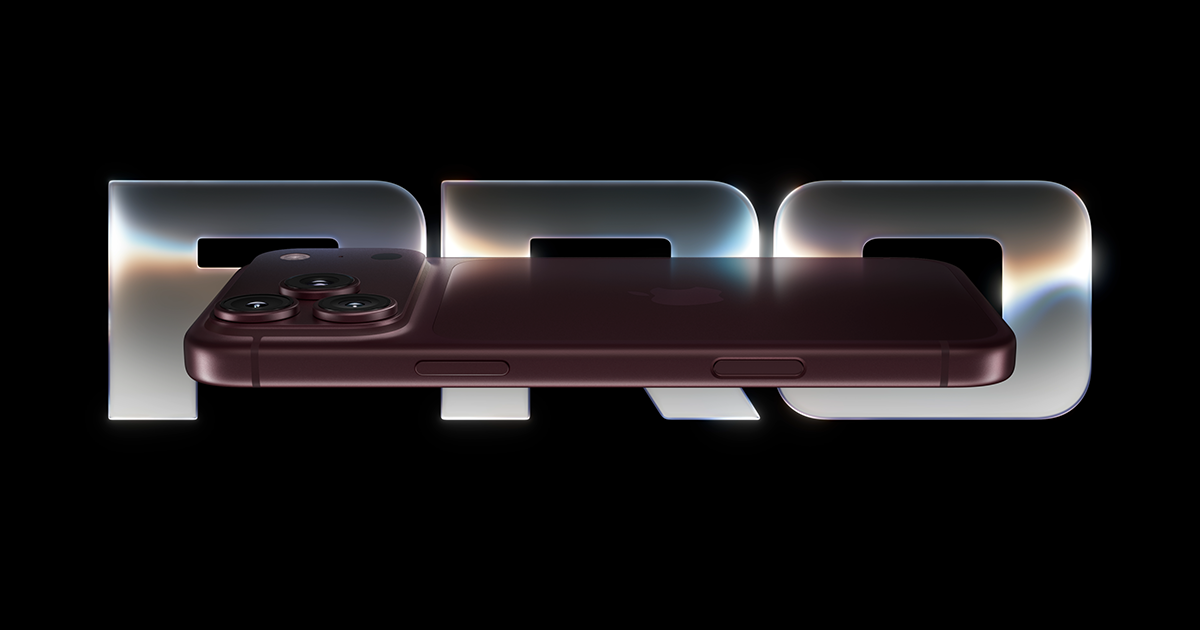
The hardware also justifies the premium: the A20 Pro chip (7-core GPU, up to 40% faster graphics), a 48MP variable-aperture main camera with four physical stops, a smaller Dynamic Island, and a 5,391mAh battery in the Pro Max rated for up to 43 hours of video. Colors: Silver, Burgundy and Glacier Blue. Official China pricing:
| Model / Capacity | Official price (RMB) |
|---|---|
| iPhone 18 Pro 256GB (entry) | ¥9,999 (+¥1,000 vs last gen) |
| iPhone 18 Pro 512GB / 1TB / 2TB | ¥11,999 / ¥15,499 / ¥20,499 |
| iPhone 18 Pro Max 256GB (entry) | ¥10,999 (+¥1,000 vs last gen) |
| iPhone 18 Pro Max 512GB / 1TB / 2TB | ¥12,999 / ¥16,499 / ¥21,499 |
2. Not just phones: Apple’s 2026 price-hike checklist
Zoom out and the increases span Apple’s entire product and services line in 2026. As NetEase Tech (via cnBeta) reported, Apple raised US prices on AppleCare+ plans for some Macs and iPads in July (+$0.5/month, +$5/year), launched the family-oriented AppleCare One Family plan in September (covering up to 6 family members), and was reported in late September to be planning to cut roughly 5,000 roles in its AppleCare support business — unconfirmed, but the direction is clear: services are cutting cost and raising price at the same time.
On the subscription side, per a SMZDM roundup, Apple Music announced a global price increase on July 18:
| Item | When | Change |
|---|---|---|
| iPhone 18 Pro / Pro Max | Sep 2026 | China entry prices ¥9,999 / ¥10,999, each +¥1,000 vs last generation |
| Apple Music (US) | Jul 18, 2026 | Individual $10.99 → $11.99/mo, Family $16.99 → $19.99, Student $5.99 → $6.99 |
| Apple Music (China) | Jul 18, 2026 | Individual ¥11 → ¥12/mo, Student ¥6 → ¥7, Family ¥17 → ¥20 |
| AppleCare+ (US, some Macs/iPads) | Jul 2026 | Monthly plans +$0.5/mo, annual plans +$5/yr |
| AppleCare One Family | Sep 2026 | New family plan covering devices of up to 6 household members |
3. Individuals: prepaid Apple gift cards turn “price hikes” into “already locked”
Subscription hikes sting because they take effect automatically through recurring billing — link a card once, and every future price change charges you without asking. Prepaid gift cards are the simplest firewall against that mechanism, for three practical reasons:
- The balance never expires: Apple ID credit stays valid indefinitely. Top up to today’s budget now, and even if services get pricier later, the balance just depletes faster — no surprise charges.
- It stops when it runs out: with an insufficient balance, renewals fail quietly instead of silently charging your bank card. Renewing is always your call.
- Easy payment: local payment methods work throughout — no foreign credit card needed.
How it works: buy a US Apple Gift Card (Apple Store USA, denominations $2–$500) on Nediya, redeem it to a US Apple ID, and App Store subscriptions and in-app purchases will draw from the balance first. Common top-up strategies:
| Use case | Suggested top-up | Notes |
|---|---|---|
| 1–2 US subscriptions (e.g. Apple Music) | $15–$30 | Covers 2–3 months with tax buffer |
| In-app purchases / paid apps | $10–$50 as needed | Load only what you plan to spend |
| Shopping on the US Apple Store | $100–$500 | Apple Gift Card works on Apple Store products, accessories included |
Setting up iCloud+, Apple Music and a few paid apps on a new iPhone 18 Pro? The full four-step walkthrough — choose a card, pay, receive the code, redeem — is in our guide How to Buy Apple Gift Cards in China to Subscribe to ChatGPT Plus. The process is identical; just swap in your own subscription list.
4. Teams: lock the reward budget first, then distribute
Price hikes hit companies harder: labor, subscriptions and hardware all climb together, squeezing year-end reward budgets. That makes fixed-denomination gift cards a budgeting tool in their own right — the price is locked at purchase, immune to later increases; spending is booked in one batch, and the budget boundary stays crisp. Two proven paths:
- Bulk distribution of overseas eGift cards: register a Nediya account to place self-serve orders and send in bulk across the US, Europe, Japan, the UK and more regions, as employee rewards or marketing incentives. Every card’s delivery and redemption status is trackable in the dashboard, and cards left unredeemed past their window can be recalled or refunded — unclaimed budget is not wasted budget. This matters even more in a price-hike year: the industry widely sees gift cards that go unclaimed after distribution, and Nediya’s site puts that figure as high as 20%. Trackability plus recall directly determines how much of your reward budget actually lands.
- PayPal Payouts: for cash-style rewards, distribute allowances to remote employees or partners in batches via PayPal Payouts — suited to employee rewards, marketing incentives and supplier settlements, with no manual per-person transfers.
A practical combination: PayPal Payouts for core-team cash rewards, eGift cards (Apple, Amazon and more) for broad employee incentives — fixed denominations, trackable, recallable. For the full bulk-distribution workflow and pitfall list, see Year-End Employee Rewards: A Complete Guide to Bulk Distribution of Overseas eGift Cards.

5. FAQ
How much did the iPhone 18 Pro go up? What does it cost now?
China entry prices: iPhone 18 Pro 256GB at ¥9,999 and Pro Max 256GB at ¥10,999, each ¥1,000 above the previous generation; 512GB–2TB tiers run ¥11,999–¥20,499 and ¥12,999–¥21,499 respectively. Final prices are subject to Apple’s official site or app.
When does the base iPhone 18 launch?
According to media reports, the base iPhone 18 is delayed to spring 2027, leaving the Pro and Pro Max as the only launch options — one reason Counterpoint’s analyst cites for the Pro series’ outsized sales.
What does Apple Music cost after the price increase?
Since July 18, 2026: China Individual ¥12/month, Student ¥7, Family ¥20; US Individual $11.99/month, Family $19.99, Student $6.99. Check the app for current pricing.
Does Apple gift card credit expire? Do price hikes affect an already-loaded balance?
No and no. Credit redeemed from an official Apple gift card never expires, and price increases only affect future billing periods — the balance itself is untouched. US Apple Store gift cards ($2–$500) are available on Nediya with instant delivery after payment.
How can my company distribute Apple gift cards as employee rewards?
Register a Nediya business account to place self-serve bulk orders, track each card’s delivery and redemption status, and recall or refund cards left unredeemed; PayPal Payouts is available for cash-style rewards. Volume pricing and quotas are available after registration or via our sales contact.
Sources
- MyDrivers (Fenghuang Tech): iPhone 18 Pro Max tops weekly sales chart (nearly 1.3M units in 7 days, +¥1,000 price hike, JD backorder to Oct 14)Sep 30, 2026 (source of the sales chart above)
- The Paper: iPhone 18 Pro series grew 12% YoY in China’s first week, Apple took 33% share in W38 (Counterpoint Research)Sep 30, 2026
- NetEase Tech (cnBeta): Apple reportedly plans to cut 5,000 AppleCare roles (includes AppleCare+ price increase and AppleCare One Family details)Sep 30, 2026
- SMZDM: Apple’s across-the-board price adjustments — Apple Music’s July 18 global repricing (US and China tiers)Sep 30, 2026
- Apple official store: Buy iPhone 18 Pro / Pro Max (full China pricing)checked Oct 1, 2026 (source of the product image above)
- Nediya product page: Apple Store USA gift cards ($2–$500)